Substitute Dominants, Related IIs, and Extended Substitute Dominants
Introduction
In this lesson we will exploring substitute dominant chords. These are interesting chromatic chords that can really add more flavor to a harmony. Substitute dominants are also known as "subVs" here at Berklee. We'll looking at subVs from a jazz and contemporary perspective to see how they can be used. In our Composers on Composing section, we'll be talking to Richard Boulanger, Ayn Inserto, and Michael Sweet.
Objectives
By the end of the lesson, you will be able to:
understand the concept of the substitute dominant and recognize and analyze it correctly in chord progressions
understand the concept of the diatonic vs. non-diatonic related II chord for Substitute Dominants and recognize and analyze it correctly in chord progressions
express substitute dominants and related IIs as chord scales. Use chord scale knowledge to realize progressions in four and five parts
understand the concept of the Extended Substitute Dominant series, recognize and analyze it correctly in chord progressions. Realize common progressions containing the concept in four- and five-part chord voicings
understand and comment on some of the ways that composers think about a piece harmonically
The Slippery Slope: The Substitute Dominant Chord
Same but Different
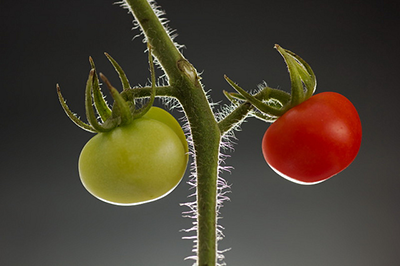
There are many things in our lives that are similar, yet different. A green and a red tomato are both tomatoes but they taste different. A generic drug acts the same way as its brand name original, but it's less expensive. An artificial hip works like a normal hip but it's made from synthetic materials. Ingredients in cooking can also be substituted. The chart below shows healthier substitutes for frequently used cooking ingredients.
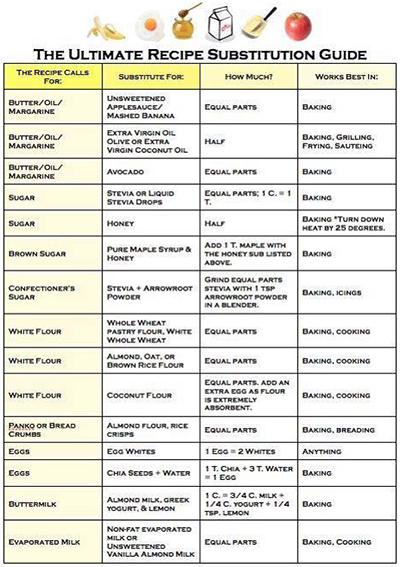
In music, substitute dominant chords take the place of a dominant chord and function in the same way. Substitute dominant chords aren't any healthier than regular dominant chords, but they will give your music a different flavor.
Creating Substitute Dominant Chords
Tritone Resolution of the V7 Chord
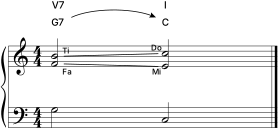
The diatonic dominant 7th chord in major-key harmony is the V7 chord (dominant). As you have learned, it has a tendency to resolve to the I chord (tonic). This tendency is caused by a few factors. The first factor is the resolution of the tritone found between the 3rd and 7th of the dominant chord. The 3rd (Ti) has a tendency to resolve to Do, and the 7th (Fa) has a tendency to resolve to Mi. In Example 1, the 3rd of the V7 chord resolves upwards to the tonic and the 7th of the V7 chord resolves downwards to the 3rd of the tonic (I) chord. The 5ths have been omitted in Example 1.
Example 1.
Downwards Root Motion by Perfect 5th
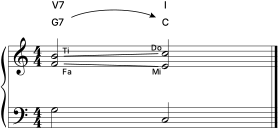
Another powerful force that creates a pull towards the tonic is the root movement. Downwards root motion by a perfect 5th is very strong (see Example 2). This motion combined with the tritone resolution creates the strong pull towards tonic.
Example 2.
G7 and D
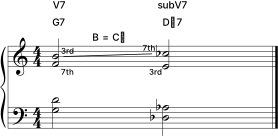
Interestingly, the 3rd and 7th of every dominant 7th chord are shared with another dominant 7th chord. In these relationships, the 3rd of the first dominant 7th chord is the 7th of the second dominant 7th chord, and the 7th of the first dominant 7th chord is the 3rd of the second dominant 7th chord. The root of the dominant 7th chord that shares the two notes is a tritone away from the root of the original dominant 7th chord. You may feel like you need to re-read those last few sentences over again, but taking a look at Example 3 will be helpful. Here you can see that the B (3rd) and F (7th) of the G7 chord are also the 7th and 3rd of a D
Example 3.
I-IV-V7-I Progression
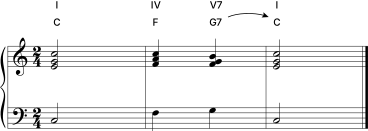
Example 4 is a short progression that closes with a V7 to I cadence. Notice the resolution of the V7 chord.
Example 4.
SubV to Tonic
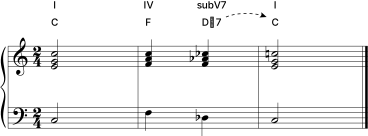
Example 5 substitutes a D
Example 5.
Substitute dominants add another degree of chromaticism to music and, like appropriate substitute ingredients in cooking, can add interesting new flavors to your compositions.
Substitute Dominants in Action
Tower of Power
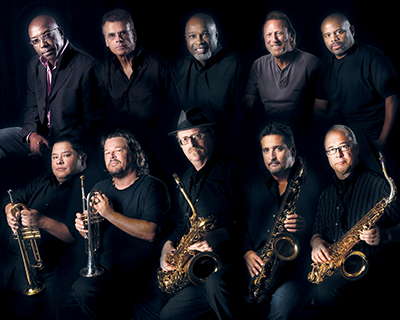
Listen to and look at the two-bar intro and first verse of "Come Back Baby" by Tower of Power.
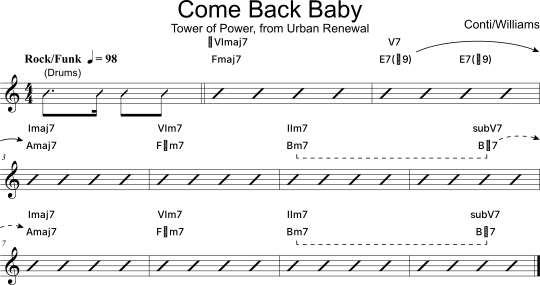
Tower of Power. "Come Back Baby," from Urban Renewal. (Warner Bros./1993).
The first verse of "Come Back Baby" begins in bar 3 with a Imaj7 chord and continues with a VI-7 followed by a II-7 chord. The most logical practice—especially in strictly diatonic harmony—would be to use a V7 chord (E7) to return to the Imaj7 chord in bar 7. However, a B
Substitute Dominant SubV Possibilities
As you learned in Theory and Composition 2 and reviewed in lesson 1 of this course, there are also secondary dominant chords. The same substitution principle applies to secondary dominant chords. Substitute dominant chords can also replace secondary dominant chords.
The following examples illustrate the secondary dominant subV possibilities.
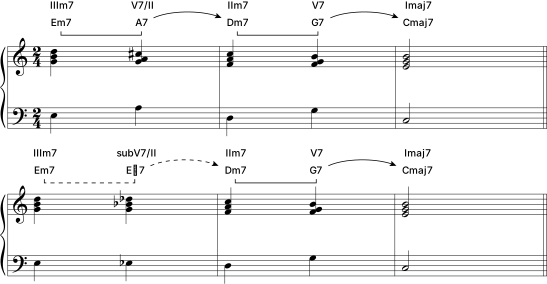
Example 7. V7/II and SubV/II
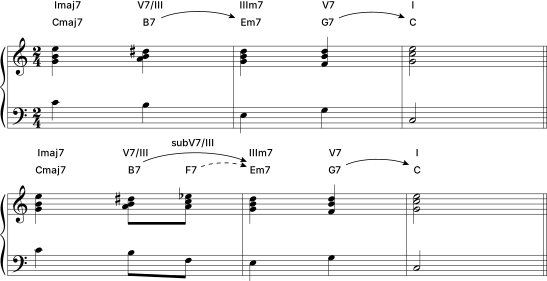
The subV/III can sometimes be confusing because it is the only major-key substitute dominant chord with a diatonic root and it is often found as a IV7 chord in the blues. Furthermore, in its triadic form, it is the subdominant chord.
Due to these considerations, the chord would ordinarily be subdominant in function unless it is interpolated (inserted) between the secondary dominant V7/III and III-. Only then would it be labeled and understood as a subV/III. As a subV/III it is most often found in short rhythmic duration.
Example 8. V7/III and Interpolated SubV/III
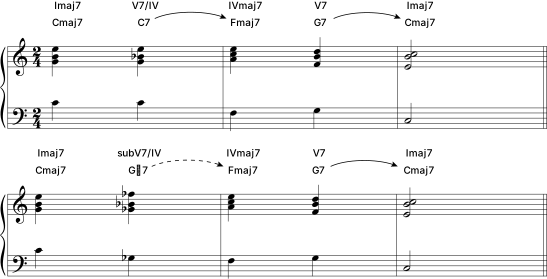
Example 9. V7/IV and SubV/IV
Example 10. V7/V and SubV/V
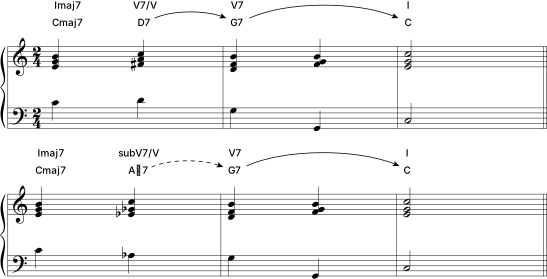
The subV/VI is the
Example 11. V7/VI and Interpolated SubV/VI
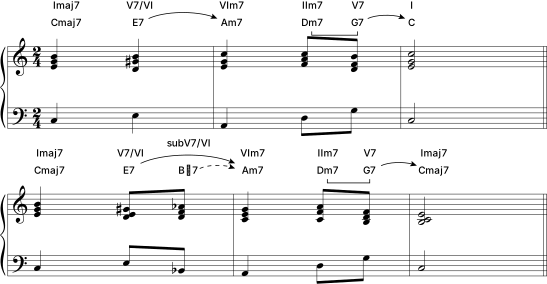
As you can see, the non-diatonic harmonic possibilities begin to get even richer!
Paquito D’Rivera’s “Brussels in the Rain”
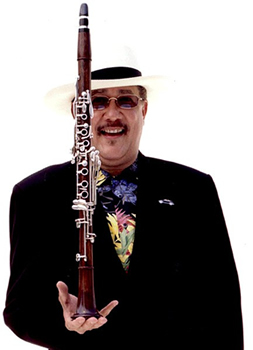
Paquito D’Rivera
Let's look and listen to Paquito D'Rivera's "Brussels in the Rain."
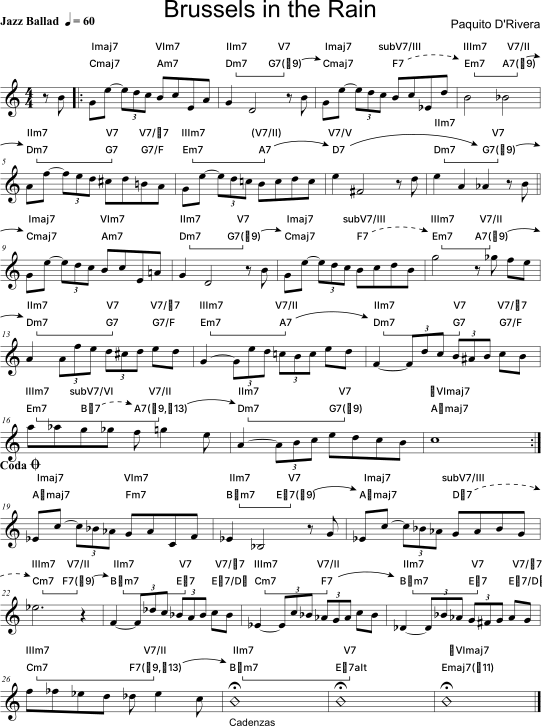
This beautiful song employs many of the harmonic concepts we've studied so far.
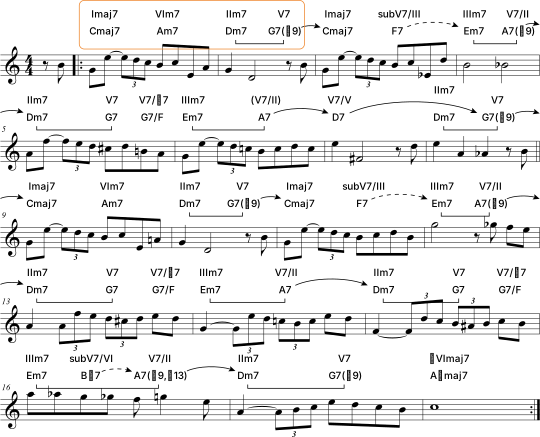
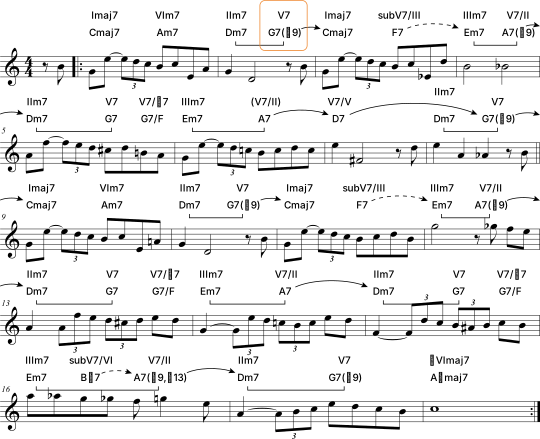
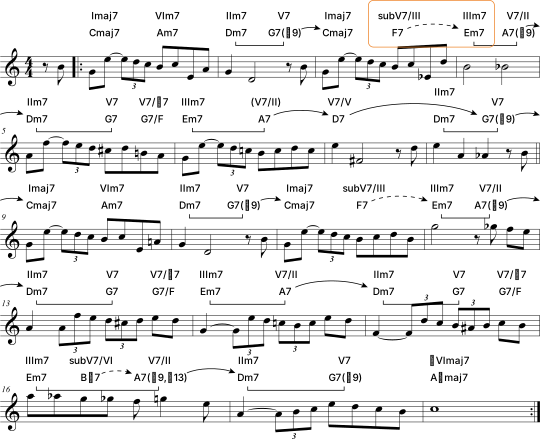
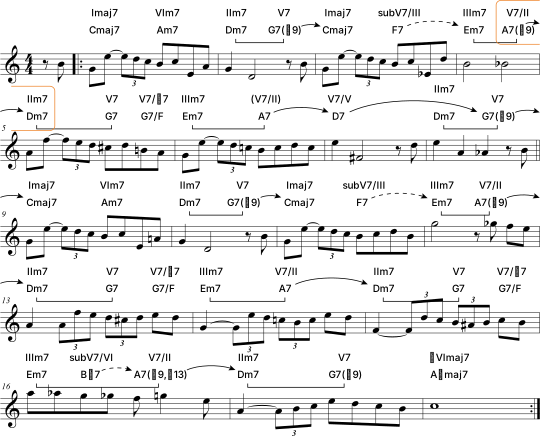
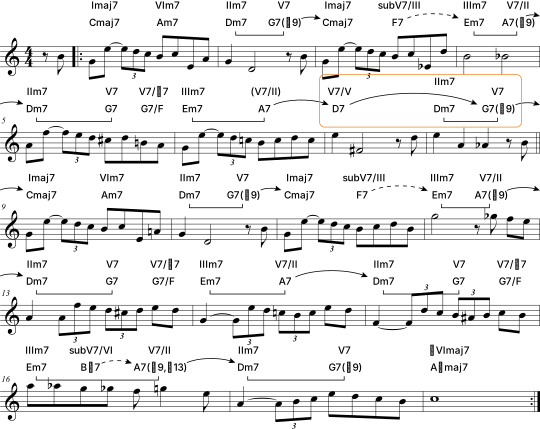
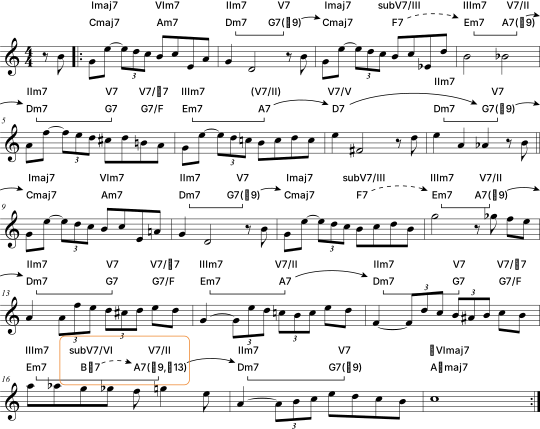
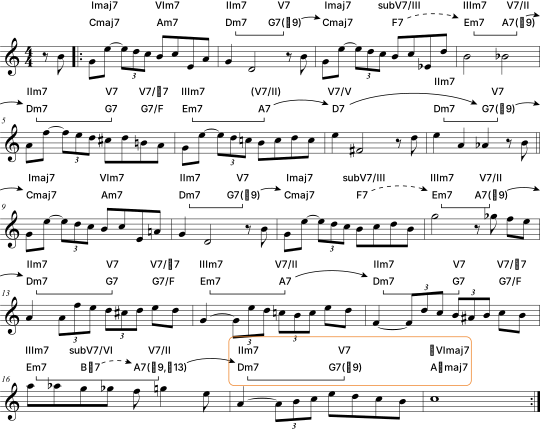
In this short example we can find diatonic harmony, modal interchange (borrowed chords), secondary dominants, and substitute dominants. The harmonic and melodic chromaticism gives a richness and interest to the music.
Workshop: Substitute Dominant Chord Analysis
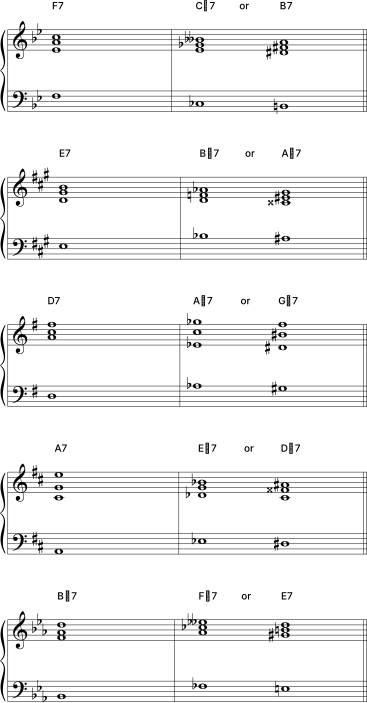
Here are two exercises practicing substitute dominant chords:
1. Let's practice creating substitute dominant chords. Name and construct the substitute dominant for the chords below. Remember to build the substitute dominant chord a tritone away from the regular dominant chord's root. Sometimes, the chord root of a tritone away will be a double flat. In that case, and also for F
Download Substitute Dominant Chord Analysis (PDF)

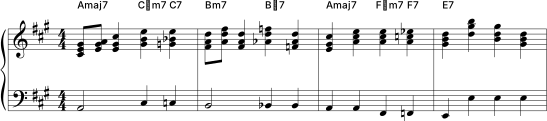
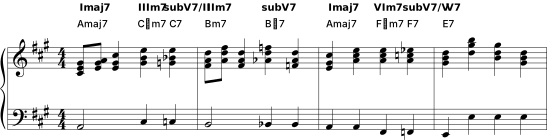
2. Using Roman numerals above the chords, analyze the following progressions.
This quiz is case sensitive. Use upper case letters for the Roman numerals, and lower case letters for maj7, sub, etc. Example: IVmaj7, subV7/V, Vm7, Imaj7
Blended Families: Substitute Dominants and Their Related II Chords

Relatives in a Human Family
In Music Theory and Composition 2, secondary dominants and their related II chords were presented as being similar to relatives in a human family. The core family is similar to diatonic harmony, and the secondary dominants and their related II chords are analogous to relatives. Substitute dominants are just a bit further removed from the diatonic chords. Perhaps these chords can be seen as part of a blended family, especially when they are coupled with their related II chords.
Related II Chords of Secondary Dominant Chords Review
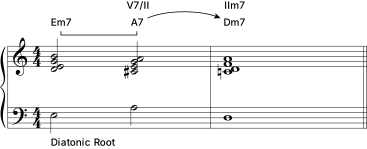
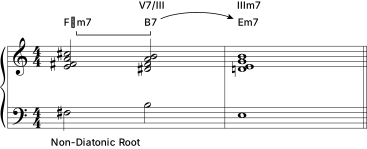
As you've learned, each major key has five secondary dominant chords (V7/II, V7/III, V7/IV, V7/V, and V7/VI), each with a related II chord. And, the root of the related II chords for secondary dominants, except the related II for V7/III, is built on a diatonic note. Let's review the related II chords of secondary dominant chords.
Example 1. V7/II with Its Related II Chord
Example 2. V7/III with Its Related II Chord
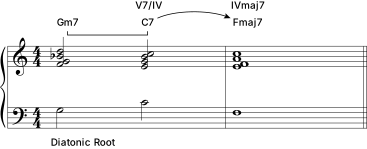
Example 3. V7/IV with Its Related II Chord
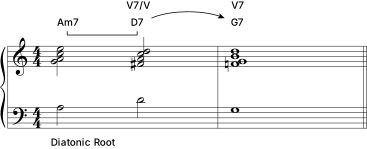
Example 4. V7/V with Its Related II Chord
Example 5. V7/VI with Its Related II Chord
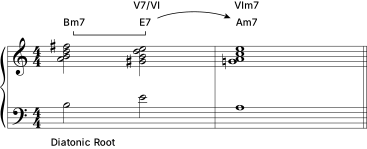
Note that each of the examples above uses a minor 7th chord as the related II chord. The secondary dominants sometimes can also be paired with minor 7(
SubVs of Dominants and Their Related II Chords
Each major key has six substitute dominant chords (subVs): a subV for each of the secondary dominants, plus a subV for the primary dominant. In Music Theory and Composition 2 you learned that the root of a secondary dominant's related II chord is a perfect 5th above the secondary dominant's root. This relationship is shown through the solid line bracket connecting the two chords.
SubV Chord Types and Its Related II Chord
Some of the subVs also have a related II chord. For those chords the subV's related II chord is also a perfect 5th above its root. The subV's related II chords function similarly to subdominant (II-7) to dominant (V7) pairings in diatonic harmony.
For analysis, the relationship between the subV and its related II chord is also indicated by a bracket. The subV resolving down a half step is indicated by a dotted line and arrow instead of the solid line and arrow that shows root movement by perfect 5th.
Example 6. SubV and Its Related II Chord
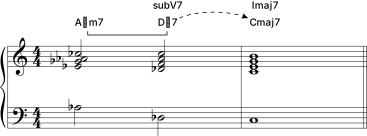
Example 7. SubV/II and Its Related II Chord
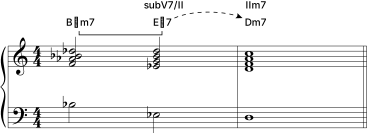
However, not all of the subV chords have a related II chord. This is because some of the potential related II chords already have a diatonic function. In C major, the potential related II chord of subV/III (F7) is C-7. C-7 is a modal interchange chord borrowed from the parallel minor and will be heard functioning as a I-7 chord.
In C major, SubV/VI is B
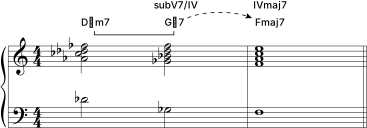
SubV/IV (G
Example 8. SubV7/IV and Its Related II Chord
SubV/V also has a non-diatonic related II chord.
Example 9. SubV7/V and Its Related II Chord
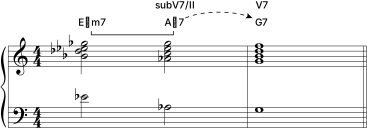
You may have noticed that all of the subV related II chords that are analyzed as such have non-diatonic roots (A
Further Relationships of SubVs and Related II Chords
Many families grow through marriage and children. Thus, more connections are added to the family tree. Someone's sister could be another person's cousin or mother. Someone's father could be another person's uncle. The people themselves don't change, but their relationship to one another may have a different name.

Family Tree
Chords in harmony can also have different relationships. A C major chord will be tonic in the key of C, sub-dominant in the key of G, and dominant in the key of F. Same chord, three different functions. Up to this point in Theory and Composition 1, 2, and 3, the major-key family harmonic tree has diatonic chords, borrowed chords, secondary dominant chords, substitute dominant chords, and related II chords of substitute dominant chords.
SubV Chord Types with Chromatically Related II Chords
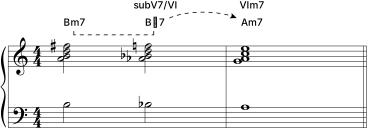
Let's look at another relationship between subVs and related IIs. Let's begin with the related II chord of the secondary dominant chord and follow that chord with a subV. A new relationship is now created. The related II chord moves down a half step to the subV, which then resolves down by a half step to its target. This new relationship between the II chord and the subV is shown with a dotted bracket. As before, the dotted line with an arrow shows the substitute dominant function of the subV.
Example 10. SubV with Chromatically Related II Chord
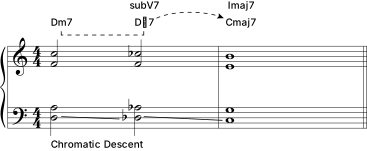
Example 11. SubV/II with Its Chromatically Related II Chord
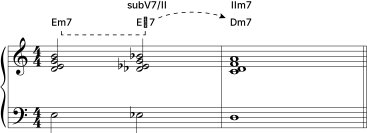
Example 12. SubV/III with Its Chromatically Related II Chord
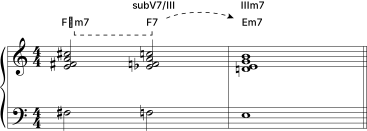
Example 13. SubV/IV with Its Chromatically Related II Chord
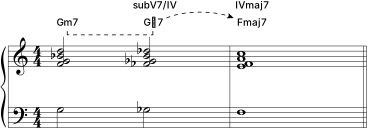
Example 14. SubV/V with Its Chromatically Related II Chord
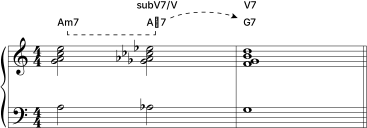
Example 15. SubV/VI with Its Chromatically Related II Chord
Related II Chord of SubV Moving to V7
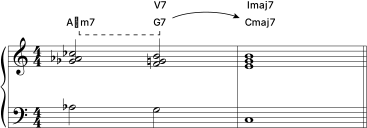
Our secondary dominant, substitute dominant, and related II chord family is nearly complete. One more relationship remains. The related II chord of a substitute dominant may be paired with a dominant. Although this is an unusual relationship, it can be found in some music.
Example 16 shows the related II chord of subV moving to a the V7 then resolving to tonic. This relationship can also occur with other subV related II chords.
Example 16. Related II Chord of SubV Moving to V7
“Moon River” Analysis
Carolyn Leonhart's arrangement of composer Henry Mancini's and lyricist Johnny Mercer's "Moon River" (below) features a number of secondary dominants and their related II chords. There are also a few subVs and one instance of a subV with its related II chord. Study the score carefully and listen how the related II chords enrich the harmony of the arrangement of this wonderful American standard that won an Academy Award in 1961 as Best Original Song from the movie Breakfast at Tiffany's.
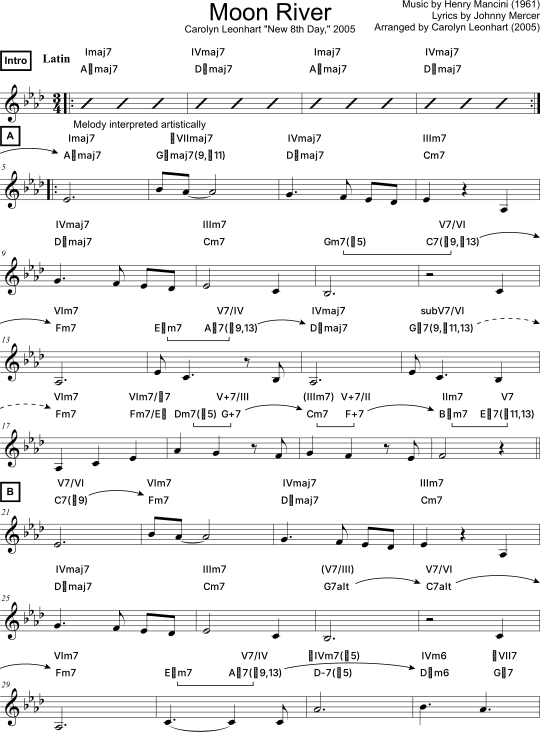
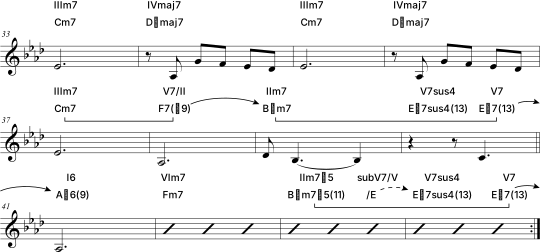
Carolyn Leonhart. "Moon River," from New 8th Day. (Sunny Side/2005).
Workshop: Substitute Dominants and Their Related II Chords
Complete the Roman numeral analysis for the example below. Remember to put in the appropriate brackets and arrows.
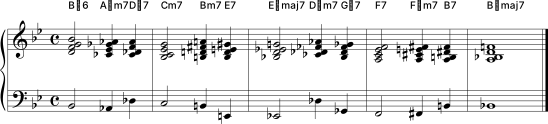
Download Substitute Dominants and Their Related II Chords Workshop (PDF)
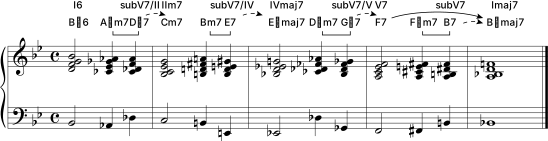
Laying It Out: Chord Scales for Extended Dominants and Related IIs
Chord scales are incredibly helpful mnemonic devices for composers. Memorizing the correct chord scales for each of the harmonic phenomena in this course will help you to remember the appropriate tensions for each musical situation. As your knowledge in this area increases you will begin to see more and more musical connections!
Deriving Chord Scales for Substitute Dominants
Understanding how to derive the tensions for substitute dominants is a little more complex than the process for secondary dominants. With secondary dominants, the tensions are all notes derived from the scale of the key of the piece. But in order to understand substitute dominant chord scales we need to look to the V7 chord and find its most chromatically altered form.
As we have learned, the diatonic V7 chord (with or without tensions 9 and 13) creates an expectation of resolution to the I chord.
V7 to I:
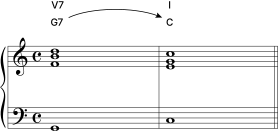
By chromatically altering the tensions of the V7 we can increase that expectation. By adding 
V7alt to IMaj7:
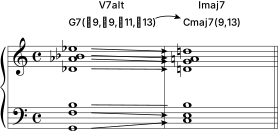
If we express this chord as a scale, the result is called the altered dominant scale.
Altered Dominant Chord Scale:

The altered dominant scale is our source because it contains both the essential notes of the primary dominant as well as the notes of the substitute dominant. The D
When reordered from
This chord scale provides us with a diatonic tension
D

The substitute dominant is usually preceded by the II-7 chord. This creates a progression that starts in the key, then dips out of the key and then back in to the key. In the example below you can see the linear chromatic motion that occurs in the progression from II-7 to subV7 to IMaj7.
II-7 SubV7 IMaj7:
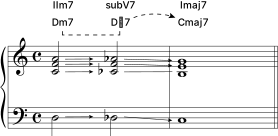
When the harmony is limited only to triads (or 7th chords for that matter) the subV's "out-ness" can be really obvious to the ear. Particularly when the root or 5th of each chord is in the melody. Voicing the 3rd in the lead (soprano voice) of each chord helps to soften this effect.
In thicker harmonic textures that include tensions in the voicings, certain tensions (particularly the
II-7 SubV IMaj7 with Tensions:
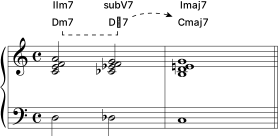
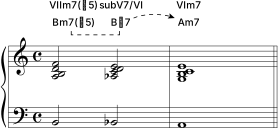
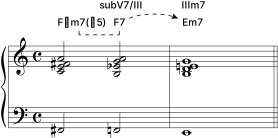
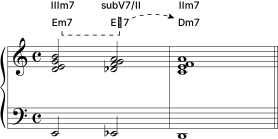
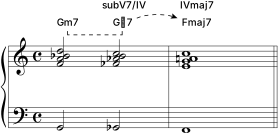
The following are all secondary subVs preceded by the related II a half step above and resolving to the expected goal chord. In each case the subV has been voiced with tensions from the Lydian
SubV of VI:
SubV of III:
SubV of II:
SubV of IV:
SubV of V:
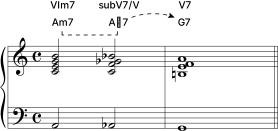
Notice how in each of the examples the non-diatonic tensions have a tendency to move down chromatically by a half step while the diatonic tensions are tones common to the chord of resolution.
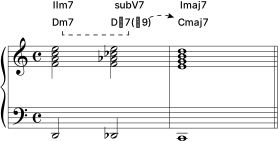
For substitute dominants that resolve to a target chord that has a major 3rd (i.e. I, IV, and V7) another option is possible. The Lydian
D

In this scale the T
SubV voiced with T
Duke Ellington’s “Satin Doll”
Another progression involving substitute dominants can occur when a subV is prepared by the related II chord a perfect 5th above. The final cadence of Duke Ellington's "Satin Doll" contains this progression. Notice how the progression A-7, D7, A
"Satin Doll" Final Cadence:
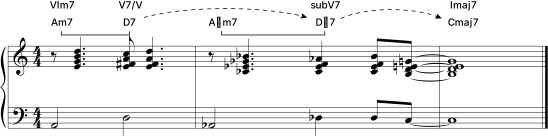
In this situation the subV is usually expressed as a Mixolydian chord scale and its related II-7 by a Dorian chord scale. This helps to emphasize the sequential nature of the progression.
Watch the full arrangement of "Satin Doll" and listen for the how the final cadence is set up:
Summary
The chord scale for most substitute dominants is the Lydian
The Lydian
The Lydian
Substitute dominants that are preceded by a related II a perfect 5th above are more rare. In this instance the related II-7 is Dorian and the subV is Mixolydian
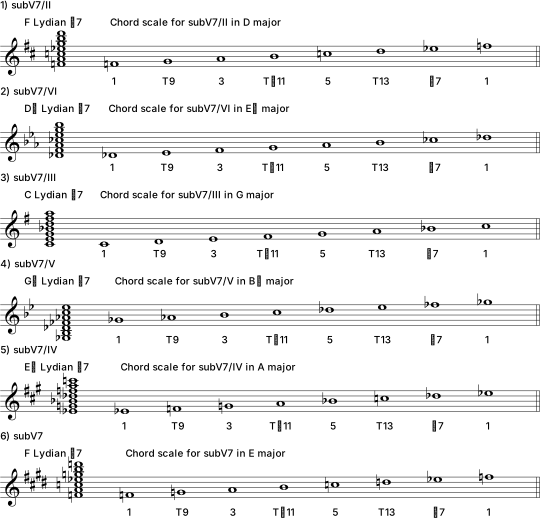
Workshop: Chord Scales of Substitute Dominants
For this workshop you will:
Write the chord scale for each of the substitute dominants indicated
Pay attention to the key signature
Name each scale and label each note as in the example answer
Check your answers against the answer key provided
Riding the Express Train: Extended Substitute Dominants
Just as substitute dominants can stand in for both the primary and secondary dominants in a key, the extended dominant series can also be reconstituted using tritone substitutions. In this lesson we'll look at the harmony of the bridge to Gershwin's "I Got Rhythm" and rework the chord progression in a number of new ways employing extended dominants, extended substitute dominants, and related II chords. In the workshop section we'll practice voice leading these progressions in four and five parts and describe these largely non-functional progressive patterns with our special graphic system of brackets, dashed brackets, arrows, dashed arrows, and parentheses.
 |
(missing audio)
|
Extended Dominants Series Using Extended SubVs
In lesson 2 of this course we encountered the extended dominant series in Gershwin's tune "I Got Rhythm."
Rhythm Changes Bridge:
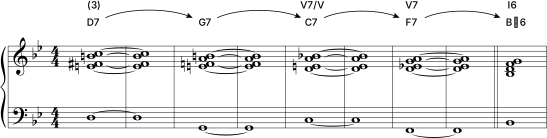
As you'll recall, the extended dominant series in the B section, or bridge of the tune, acts like a backward extension of the sound of V7/V to V7 to I. Each dominant chord that precedes the secondary dominant is another level removed from the final goal chord. Please notice that in the example above, each chord has been voiced with the appropriate tensions from the Mixolydian chord scale for each extended dominant.
Rhythm Changes in 5th with 1/2 Steps
An extended dominant series starting on scale degree 3 can also make its way back to the tonic of the key descending by a half step rather than a perfect 5th.
Extended Substitute Dominant Series:
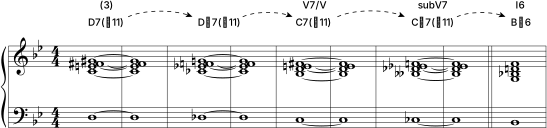
You'll note that in the above example each of the chords of the extended substitute dominant series has been voiced with tensions 9 and
Interpolated SubVs
Another possible reharmonization of the "Rhythm Changes" bridge doubles the harmonic rhythm, interpolating a substitute extended dominant every other measure.
Rhythm Changes Interpolated SubVs:
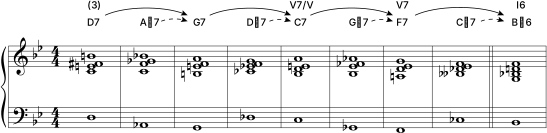
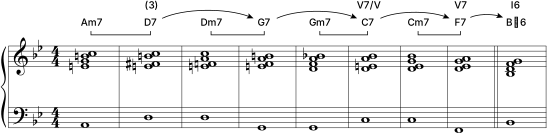
Since any dominant function chord can be preceded by its related II, the Rhythm Changes bridge can have even more harmonic variation. First, here's the original Cycle 5 extended dominant series in which each chord is preceded by its related II.
Rhythm Changes with Interpolated IIs:
Extended SubVs with Related IIs
Now let's do the same with the extended substitute dominant series.
Rhythm Changes with Extended Substitute Dominants and Interpolated IIs:
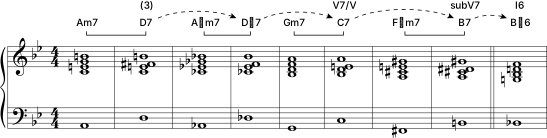
You'll notice that in this last example that the extended substitute dominants are not voiced with tension
"Ask Me Now's" Use of Extended Dominant Series
Countless jazz tunes have been written on the chord changes of "I Got Rhythm": "Anthropology" by Charlie Parker; "Rhythm'ning" by Thelonius Monk; and "Oleo" by Sonny Rollins, just to name a few of the most famous. Composers have used these and other harmonic variations of the bridge to put their own personal stamp on a common idiom.
"Ask Me Now"
Founding father of the bebop style, pianist and composer Thelonious Monk was very fond of the extended dominant series in his compositions. In his tune "Ask Me Now" he employs the extended substitute dominant series in the A section of the tune. Notice in the first three measures how each substitute extended dominant is preceded by its related II chord. After the A
 |
(missing audio)
|
Final A Section of "Ask Me Now" by Thelonious Monk
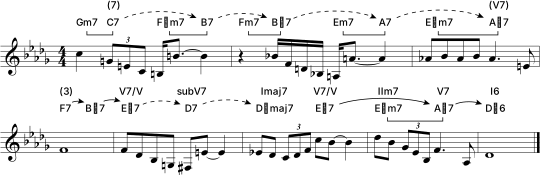
While we eventually come to understand that the tune is in the key of D
The extended dominant series and its variations involving substitute dominants and related II chords are more harmonic tools at the composer's disposal to express speed, forward motion, excitement, and expectation!
Workshop: Extended Substitute Dominant Chord Analysis
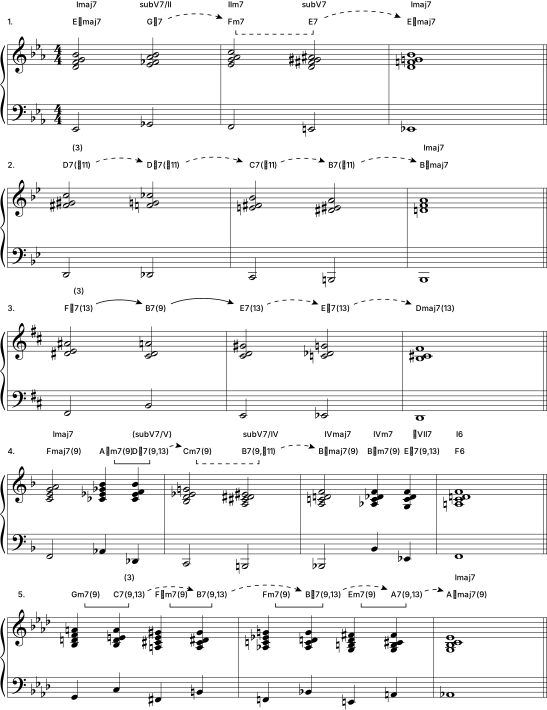
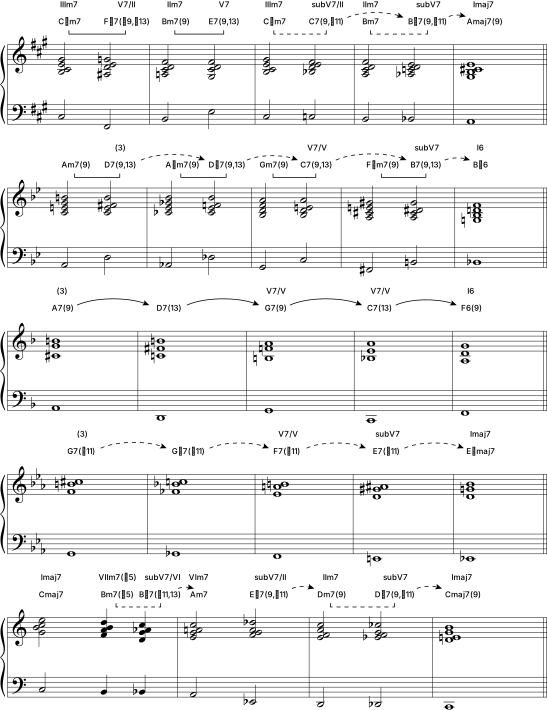
Download the Workshop PDF and follow the instructions. You'll be asked to identify chord progressions from a piano score that contain substitute dominants, extended substitute dominants, as well as other harmonies that we have studied. You'll analyze the progressions and practice voice leading them as well. Check your answers against the answer key provided.
Download Extended Substitute Dominant Chord Analysis (PDF)
Composers on Composing: Interviews with Composers about Music Theory and Creativity
This week, in lesson 3, three more composers share their thoughts on composition and answer the following question:
How does music theory and history inform your compositions?
Composers interviewed in week 3:
Richard Boulanger—Computer/electronic music composer
Ayn Inserto—Jazz composer
Michael Sweet—Video game and advertising composer
Recap
In this lesson, you have learned how to:
understand the concept of the substitute dominant and recognize and analyze it correctly in chord progressions
understand the concept of the diatonic vs. non-diatonic related II chord for substitute dominants and recognize and analyze it correctly in chord progressions
express substitute dominants and related IIs as chord scales. Use chord scale knowledge to realize progressions in four and five parts
understand the concept of the extended Substitute Dominant series, recognize and analyze it correctly in chord progressions. Realize common progressions containing the concept in four- and five-part chord voicings
understand and comment on some of the ways that composers think about a piece harmonically
In the next lesson, we will learning about augmented 6th chords, advanced figured bass, and four-part voice leading.